
Metal packaging recycling: canny facts
Food and drink cans
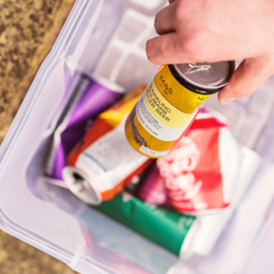
- 15 billion cans are sold in the UK every year – that’s 246 cans for every man, woman and child living in the UK (source: Metal Packaging Manufacturers Association).
- The average household uses 600 food cans and 380 drinks cans each year – each one is endlessly recyclable, over and over again into any type of metal product. From a paper clip to a car engine component, an iron to a washing machine or another food or drinks can!
- The drinks can is the world’s most recycled packaging container.
- 7 billion drinks cans are sold in the UK each year. (source: UK Can Makers, 2014).
- The empty drinks can you recycle could be back on sale in just 60 days.
Foil trays
- An estimated 16,000 tonnes of foil containers are used each year for packaging products like ready meals, pies and quiches and take aways.
- The average household uses 182 foil trays each year.
Household foil
- Households in the UK use an average of 12 metres of household foil per month.
- Every year 57 million packs of household foil are bought in the UK.
- Britain uses over 425,000 miles of household foil every year - that'll take you around the world 17 times!
- Annually, UK consumers buy enough foil to wrap over 29 million chickens.
Aerosols
(source: BAMA)
- 580 million aerosols are used in the UK every year.
- Over half are used in ‘personal care’ products, for example, deodorant, body sprays, hair and shaving products.
- The average household uses 27 aerosols each year.
- That’s 10 per person per year.
Aluminium and steel recycling
- Recycling a tonne of steel saves 1.5 tonnes of iron ore and reduces CO2 emissions by 80%, compared to making the metal from raw materials.
- Recycling a tonne of aluminium saves 9 tonnes of C02 emissions (1 tonne of CO₂ is equivalent to driving nearly 3,000 miles) and 4 tonnes of bauxite – the raw material from which aluminium is made.
- Aluminium and steel can be recycled endlessly, without losing quality. It can take as little as eight weeks for a drink can to be recycled and back on the supermarket shelf as a new can.
Saving energy, cutting greenhouse gas emissions and natural resources
- Recycling a tonne of steel saves 1.5 tonnes of iron ore and reduces CO2 emissions by 80%.
- Recycling a tonne of aluminium saves 9 tonnes of C02 emissions and 4 tonnes of bauxite – the raw material from which aluminium is made.
- Recycling cans saves up to 95% of the energy it takes to make both aluminium and steel from raw materials.
- Making aluminium cans from recycled metal is 20 times more energy efficient than using 'primary' metal (i.e. made from raw materials).